As society desperately seeks gender inclusivity in Science, Technology, Engineering, Arts, and Math (STEAM,) I see a flaw in the way adults attempt to attract girls. In my community, the only STEAM activity is the highly competitive, male dominated VEX robotics. I believe that creative, collaborative opportunities are less intimidating and more interesting for the girls STEAM is still working hard to attract. Further, collaboration, not competition is the skill STEAM careers need in order to solve our biggest problems.
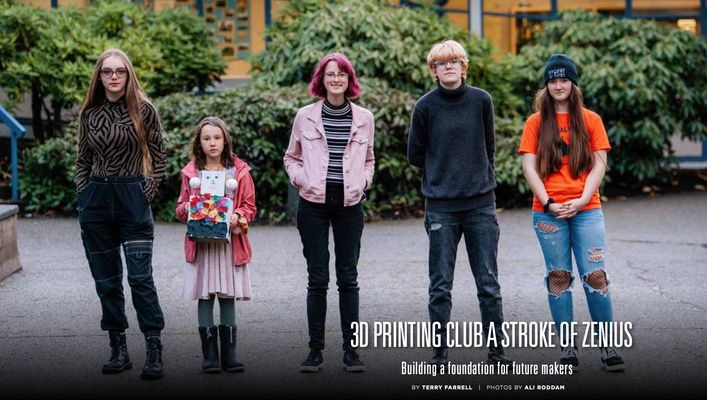
In grade ten I took initiative and used my young female perspective to develop Zenius Labs. My goal was to diversify STEAM access in the Comox Valley. I developed the concept, applied for PAC grants, recruited members, and coordinated with teachers/community members for space, equipment, and support. Our 80% female membership met twice a week to learn and collaborate on workshops and projects that focused on the strengths and interests of each member. From websites to electronics and 3D printing, members gained experience and confidence in their STEAM passions. We then partnered with the art gallery and elementary teachers to run our workshops for younger students, inspiring the 80% female attendees through role modelling.
The first challenge was losing my sponsor teacher to a health leave that left me without an official mentor. I was amazed at the other teachers and parents who offered support when I reached out to help, but without Roger it was up to me to keep people on track and set boundaries. I learned to recognize the difference between a good friend and the right person for a project. Lastly, I had to make peace with the fact that running a club takes a tremendous amount of time, and because we were all full-time students, Zenius Labs wouldn’t grow into everything I’d hoped it would in that first year. After coming to this conclusion and scaling back, I was able to accomplish some meaningful things with Zenius Labs.
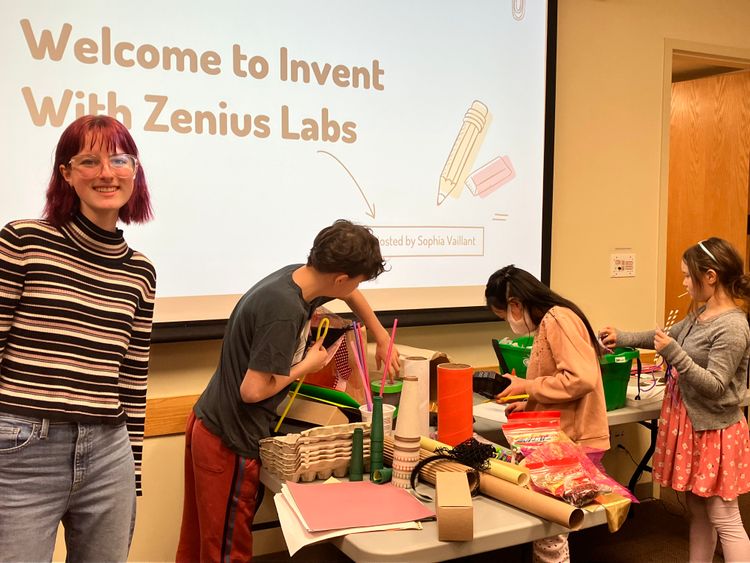
In scaling back, the 2-hour, intro to STEM invention workshop designed for students in grades 4 to 7 became my focus, as that was the piece I enjoyed the most and also something students, teachers, and parents all saw value in.
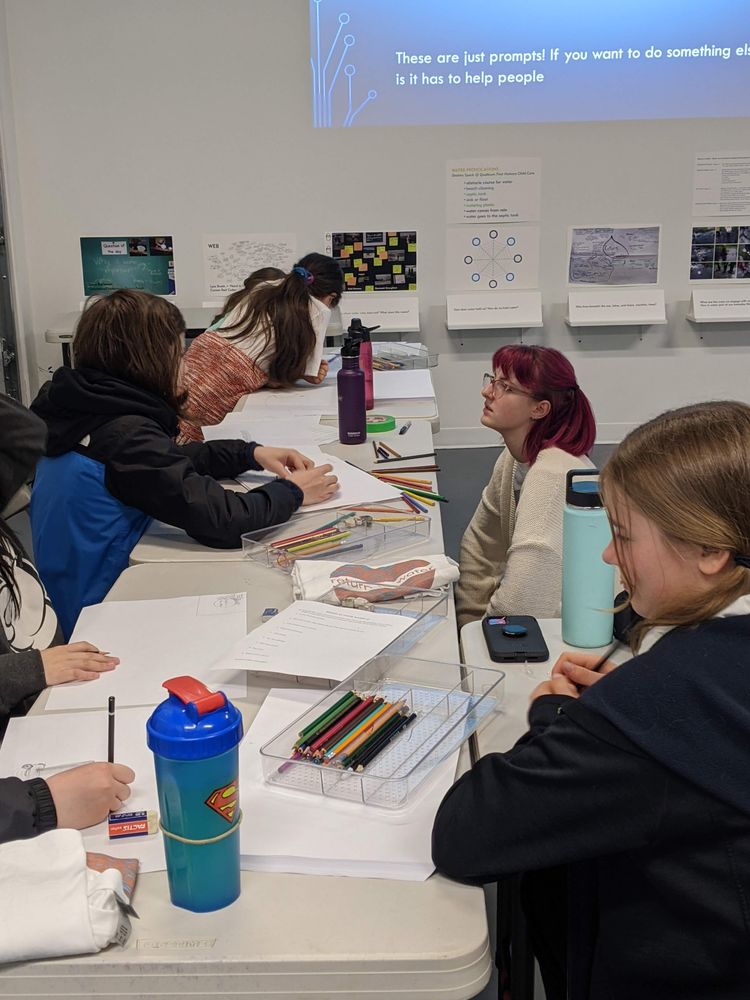
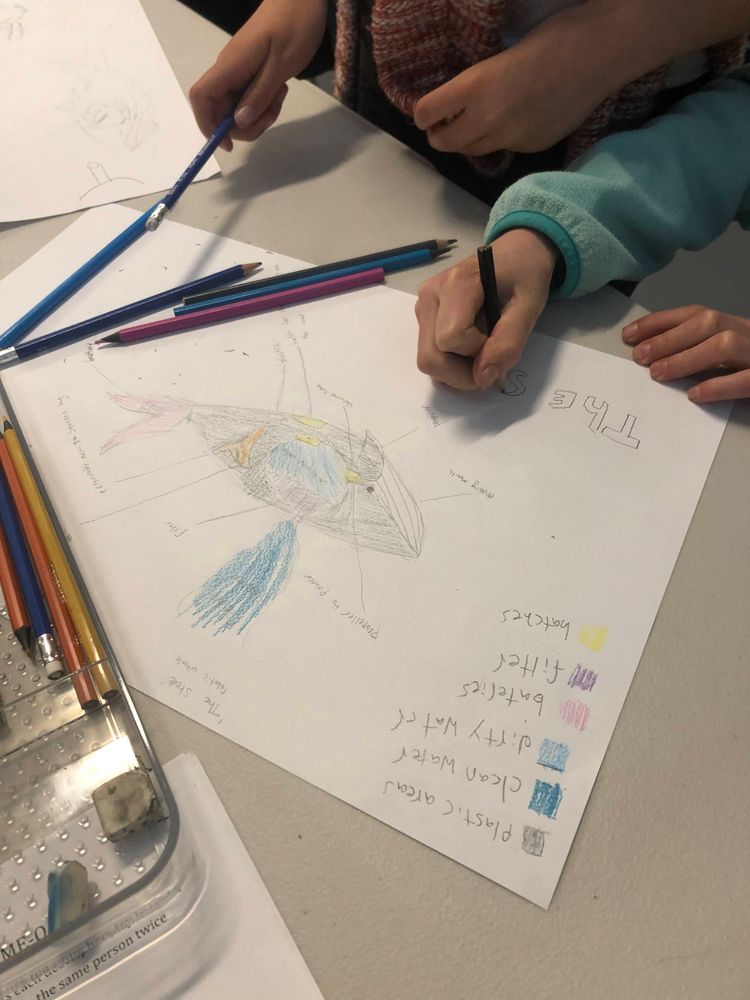
I partnered with the Comox Valley Art Gallery to run a workshop themed around protecting our waterways for their “return to water” festival in May 2022. As grade 11 came to a close, I delivered my end of year report to my funders. At this time I was asked if I would consider branching out so I could deliver my workshop to students in other learning communities in the province-wide homeschooling district which supported the local programs.
The tour was approved in November, with the idea that I could run it while I was on my spring break in March/April 2023.
Organizing and planning a tour presented itself with a whole new array of learning experiences and challenges. For every city, I needed a parent or teacher contact to spread the word to local students and assist in finding a location to run the workshop in. I had to learn to communicate and gather information from a group of people and make sure that everyone’s schedules lined up so that I wasn’t doing excess driving. I learned early on that even though group emails are easiest for me to send out, volunteers are less likely to reply to them, and when they do, the information is easily muddled on my end and harder for me to find moving forward.
On the tour itself I learned that a topic or way of engaging that works really well for one group won’t always work for another, and that the workshop has to be flexible to adapt and serve the learning group best in any situation.
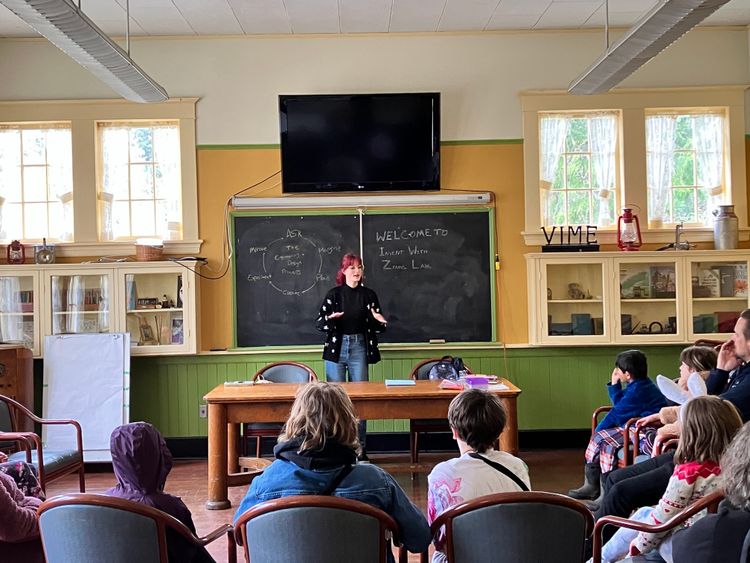
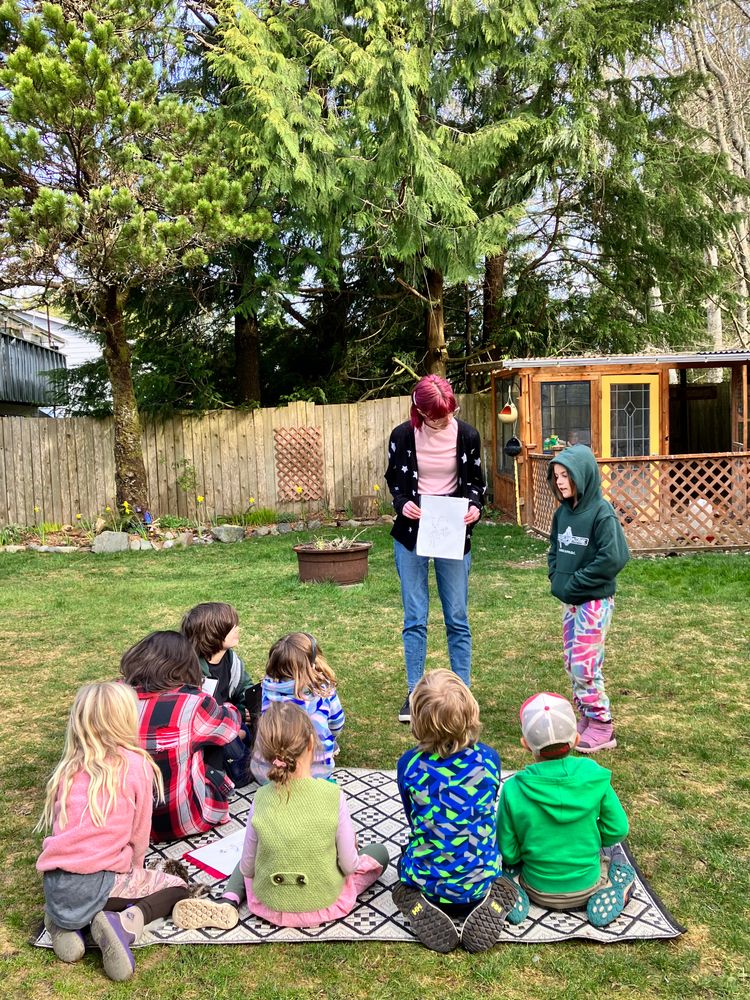
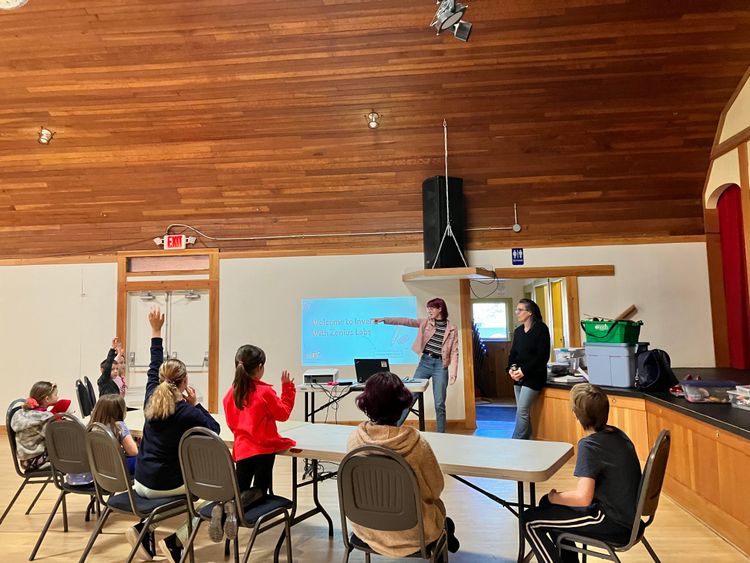
Each workshop and community was so unique. I had the opportunity to teach in so many environments, including a backyard yurt-turned classroom, a community hall, and an old one-room schoolhouse. I learned something important in each of these cities, which I discuss below.
In Errington I learned how important it is to clearly communicate my expectations when I ask for parent support with younger students. It does not mean “sit in the corner and catch up with the other parents while you sort of supervise.” In future events, I made sure to directly invite parents to participate with their children. Which improved the outcome overall.
Ucluelet taught me that I need to make changes in order for the workshop and activity to land with a younger group. The original workshop had students brainstorm solutions to problems like pollution and climate change. But younger learners haven’t always been exposed to the big picture problems facing our society.
Nanaimo taught me that the value for teachers was less about the actual theme of the workshop- or even the introduction to STEAM, and was entirely about the process of coming up with an idea, making paper plans, and then using those plans to make a physical version.
In Surrey I learned that I had to be sure to re-enforce the idea that you didn’t have to have all the answers or engineering knowledge right now, and that the way anything gets made is in teams of people who each have a piece of the knowledge puzzle.
Victoria was possibly my biggest learning hurdle. It was my only group where I didn’t have a teacher sponsor. Parent volunteers are amazing, but they require a while different kind of communication than teachers do. Teachers have scheduled time to check their emails, and generally more experience in organizing events and know the tricks to finding space and communicating with their leaning pod to find attendees. My Victoria parent needed a lot more checking in and was not great at replying to emails which was stressful for me.
Finally, Sooke taught me that big groups are entirely manageable with good parent support. This was my largest group, with 18 students, which was very overwhelming at the start. Luckily, almost the learners also had a parent or older sibling who was helpful when it came to writing, brainstorming, and the physical creation of the craft.
Possibly the most curious evolution of Zenius Labs is how it unintentionally followed me as I transitioned from pursuing a career in Engineering to doing something in business. This club that started as a way for me to do not vex but still STEM has turned into a project that revolves heavily around management, communication, and organization. The STEM elements continue to slowly fade out as I gather more feedback from teachers and students alike.
I put Zenius Labs on hold as I started university so that I could focus on school. But, if you're reading this and would like to book a workshop like this, please reach out and I would be happy to run one for you!
In its first year, Zenius Labs was featured in a local magazine. You can read the PDF article here